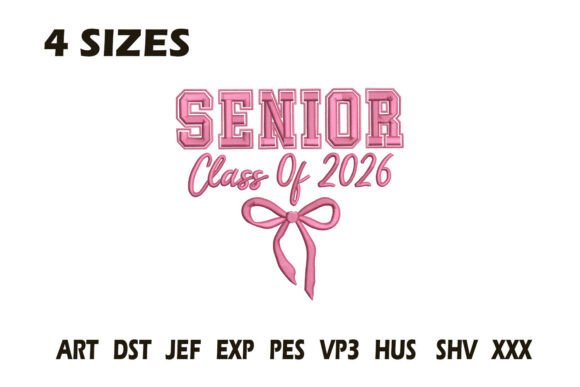
Senior Class of 2026 Pink Embroidery Review
As a professional embroidery designer specializing in commercial merchandise and branded apparel, I approach every new machine embroidery design with a critical eye toward production viability. When evaluating the Senior Class of 2026 Pink Embroidery for small business applications, my focus shifts from simple aesthetics to functional durability and brand alignment. While this design is marketed with a playful, whimsical touch suitable for t-shirts and home decor, its utility in a commercial setting requires a deeper technical assessment. For shop owners, Etsy sellers, and apparel decorators looking to capitalize on the upcoming graduation season or create nostalgic Back To School merchandise, understanding how this specific embroidery file translates from screen to fabric is essential for maintaining quality standards and customer satisfaction.
Visual Personality and Commercial First Impressions
The immediate impression of the Senior Class of 2026 Pink Embroidery is one of youthful energy and approachable charm. In the context of brand identity, this design communicates friendliness rather than rigid corporate formality. For a local boutique, creative studio, or handmade product business, this aesthetic can be highly effective. It suggests a brand that is personal, celebratory, and community-focused. However, when considering this for small business merch, one must determine if "whimsical" aligns with the desired market positioning. If your business aims for high-end luxury or industrial precision, this playful style may require modification or strategic placement. Conversely, for businesses targeting Gen Z consumers, parents, or educational institutions, the pink colorway and spirited typography serve as excellent emotional hooks that drive engagement and sales.
Real-World Applications for Small Business Merchandise
Beyond standard graduation gear, this design offers versatile opportunities for commercial embroidery projects. As an apron embroidery option, it works exceptionally well for bakeries, florists, or pet grooming salons that want to highlight their team's youthfulness or celebrate a specific graduating cohort among staff. The design’s inherent charm makes it ideal for tote bag design in retail environments, serving as a reusable marketing tool that customers actually want to carry. For custom apparel lines on platforms like Etsy, this file can be the centerpiece of a capsule collection targeting the Class of 2026 demographic.
I also see strong potential for using this design as a secondary accent element. Rather than dominating the garment, consider placing it on a sleeve cuff, near a hemline, or as a pocket detail on work shirts. This subtle application maintains professionalism while adding a unique, customized touch that distinguishes your finished product from generic competitors. For event merch or customer gifts, the design provides a tangible connection to the milestone, increasing perceived value and fostering loyalty.
Technical Considerations and Production Limitations
Despite its visual appeal, the Senior Class of 2026 Pink Embroidery presents specific challenges that must be addressed before mass production. The primary concern involves stitch density and scalability. Whimsical designs often feature intricate details or variable line weights that do not always translate well to smaller formats. If you intend to use this as an embroidered patch under three inches, you must verify that the lettering remains legible and that the pink thread does not bleed visually into adjacent elements. High stitch density in small areas can also lead to fabric puckering, particularly on lightweight performance fabrics or delicate linens.
Cap embroidery requires special scrutiny. Curved surfaces distort designs, and if this file was digitized flat without compensation for cylindrical hooping, the registration may fail on structured caps. Always test on the actual headwear substrate before committing to a run. Additionally, consider the interaction between thread colors and dark uniforms. Pink thread on navy or black fabric can sometimes appear washed out or require excessive underlay, which adds stiffness. On textured fabrics like terry cloth towels or canvas tote bags, the design may sink into the weave; using a water-soluble topping is non-negotiable here to preserve definition. Finally, because this item will likely be washed frequently, ensure the stabilizer choice supports long-term durability to prevent distortion after laundering.
Impact on Brand Value and Customer Trust
The quality of your embroidery directly influences customer perception of your overall brand. A poorly executed Senior Class of 2026 Pink Embroidery—plagued by gaps, bobbin show-through, or misalignment—signals amateurism. Conversely, a crisp, well-stitched execution reinforces trust and justifies premium pricing. When integrating this design into your design assets library, consistency is key. Ensure the pink shade matches your broader palette or complements it intentionally. Visual consistency across printable mockup presentations and physical samples builds recognition. Customers are more likely to purchase handmade product items when they see professional attention to detail. By treating this playful design with serious technical respect, you elevate it from a novelty graphic to a legitimate component of your commercial branding strategy.
Essential Designer Notes for Successful Implementation
Before loading this digital embroidery file into your machine for a client order, adhere to these professional best practices to mitigate risk:
- Conduct Contrast Tests: Stitch a sample in black and white first to evaluate the structural integrity of the design without relying on color contrast to hide flaws.
- Verify Hoop Size Compatibility: Confirm the design dimensions fit comfortably within your hoop with adequate margin for stabilization; never max out your hoop area.
- Test on Target Fabric: Never assume a design optimized for t-shirts will work on aprons or caps; always run a sew-out on the exact material intended for production.
- Review Stabilizer Pairing: Match your backing and topping to the specific fabric weight and stretch; improper stabilization is the leading cause of commercial embroidery failure.
- Create Accurate Mockups: Use realistic templates for client approval to manage expectations regarding size, placement, and color vibrancy.
- Check Licensing Terms: Crucially, confirm that your purchase includes rights for commercial embroidery and resale; personal-use licenses do not cover business merchandise.
- Inspect Spacing and Kerning: Zoom in on the file to check for overlapping stitches or insufficient spacing that could cause needle breaks or thread bunching at high speeds.
Making the Final Decision for Your Shop
The Senior Class of 2026 Pink Embroidery holds significant promise for businesses targeting the upcoming graduation market or seeking a softer, more approachable brand aesthetic. Its strength lies in its emotional resonance and versatility across various commercial embroidery applications, from staff uniforms to retail accessories. However, success depends entirely on technical due diligence. Do not rely solely on the product description’s promise of charm; validate the file’s performance through rigorous testing. By respecting the nuances of fabric texture, stitch mechanics, and brand coherence, you can transform this playful design into a profitable, professional asset for your embroidery business. Always prioritize sample testing over assumptions, and ensure every stitch contributes positively to your reputation for quality.